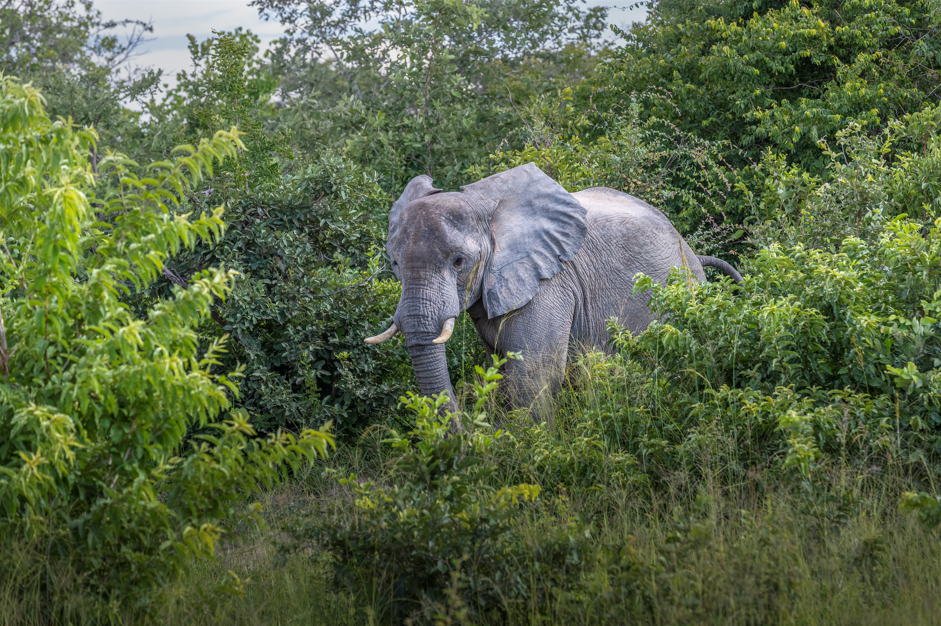

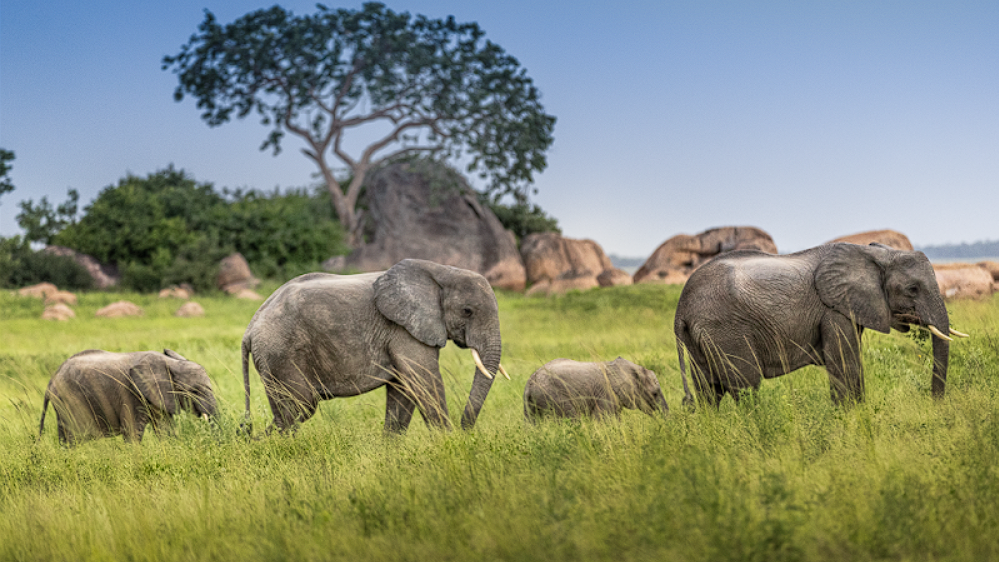

Forest elephant conservation is not decided solely within protected areas. It is shaped in farmers’ fields and rural communities, and through public policies that govern how people and wildlife share the same landscapes.
This is where the future of coexistence begins.
Beyond protecting elephants
As biodiversity conservation challenges intensify across Central Africa, the question now goes beyond how to protect wildlife. It is how to create conditions that enable both human communities and biodiversity to thrive sustainably within shared landscapes.
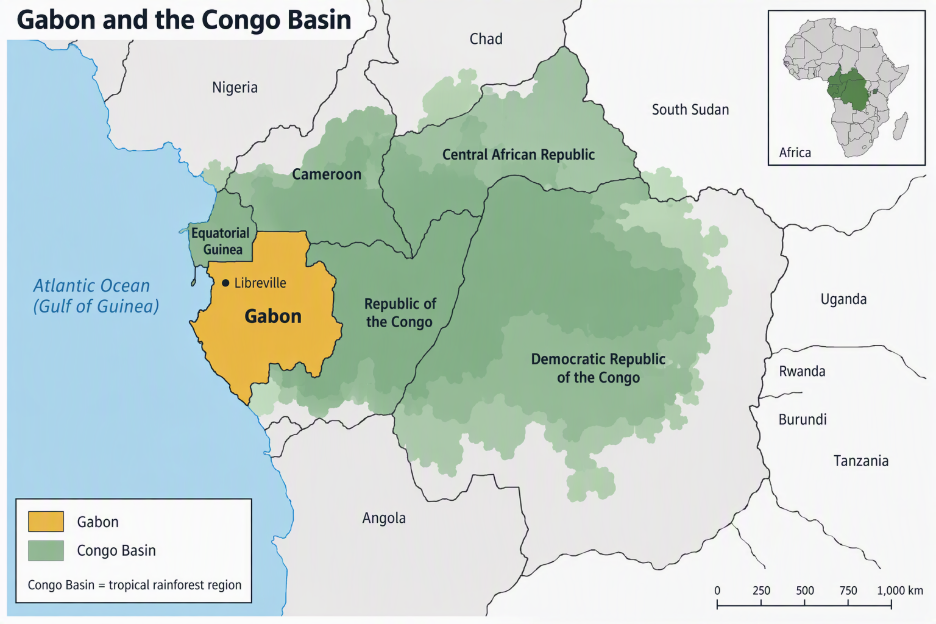
In Gabon, home to one of Africa’s largest populations of forest elephants (Loxodonta cyclotis), interactions between rural communities and elephants have consequences for conservation, rural development, food security, and territorial governance.
Crop damage caused by elephants directly affects household livelihoods. In rural Gabon, some households spend much of their time guarding fields, creating physical and psychological burdens and leaving villages nearly empty for extended periods. When these costs are not met through public policy and locally appropriate management, support for conservation can weaken.
Rethinking human-elephant conflict
Growing evidence encourages a shift away from the traditional concept of “human-elephant conflict” toward the broader and more constructive framework of coexistence. This reflects a deeper understanding of the social, economic and institutional factors that shape relationships between people and wildlife.
For example, research in 10 villages in Tanzania found that tolerance varied not only with crop losses, but also with income, perceived benefits, education and access to compensation. This shows why fairness, trust, and community participation matter alongside technical measures.
Fences, early-warning systems and crop-protection measures remain valuable tools. In practice, these can include beehive or chilli-based deterrents, coordinated field guarding, rapid alerts when elephants approach farms, and land-use planning that protects movement routes. Yet no single measure is universally effective. Solutions must be adapted to local conditions and embedded in broader strategies that strengthen local governance, participation and collaborative natural-resource management.
Site-specific measures may deliver only short-term relief or shift risk elsewhere. It therefore calls for interdisciplinary approaches that consider shared resource use across space and time.
Similarly, a coexistence framework tested in African elephant-range countries combines environmental, social, political, cultural and economic factors. Examples include involving communities in diagnosing the problem, coordinating government and conservation actors, testing a package of measures, and adapting it as local conditions and elephant movements change.
The governance and public-policy imperative
Across Gabon and the wider Congo Basin, the challenge extends beyond mitigating agricultural losses. It is about strengthening governance systems capable of balancing biodiversity objectives with the legitimate needs and aspirations of rural populations.
The long-term conservation of forest elephants will depend on governments, local authorities, technical and financial partners, the private sector and communities jointly developing inclusive, equitable and durable models of coexistence.
“Coexistence is not only a conservation objective. It is also a development, resilience and environmental-governance challenge that requires long-term commitment, collaboration and innovation.”
From conflict to coexistence
The real question is no longer only how to reduce conflict between people and elephants, but how to strengthen policies, institutions and governance mechanisms that enable communities and biodiversity to prosper within the same landscapes.
If you work in conservation, rural development, public policy, finance, or technology, help move this conversation into action: share an approach that has worked, connect practitioners across sectors, and support solutions designed with affected communities rather than for them.
What policy, partnership, or practical initiative do you believe holds the greatest potential for strengthening coexistence between local communities and wildlife across Africa?

Project Coordinator, Gabon josette@ab-entheos.co.ke